Use this file to discover all available pages before exploring further.
Loraverse organizes your work like a . The easiest way to understand what that means is through tools you already know.If you’ve used Figma, you know what a component is. Design a button once. Every instance of that button across every screen knows it’s the button. Update the master, every instance updates with it.If you’ve used Premiere or Avid, you know what a master clip is. Bring footage in once. Every sequence that uses it knows where it came from. Trim the master, every reference respects it.Loraverse works on the same principle. Characters, environments, props, and styles are your masters. Once you’ve built and crowned them, every scene inherits the canonical version. Every shot is an instance of your cast and locations.Cinematic AI production goes further than visual reuse. A character isn’t just a look. They’re a role, an arc, a relationship to other entities. A scene isn’t just a timeline slot. It’s a beat in a structure, a step in a story. The Production Graph is what holds all of this together.
Frames connect to source shots and the takes they spawn
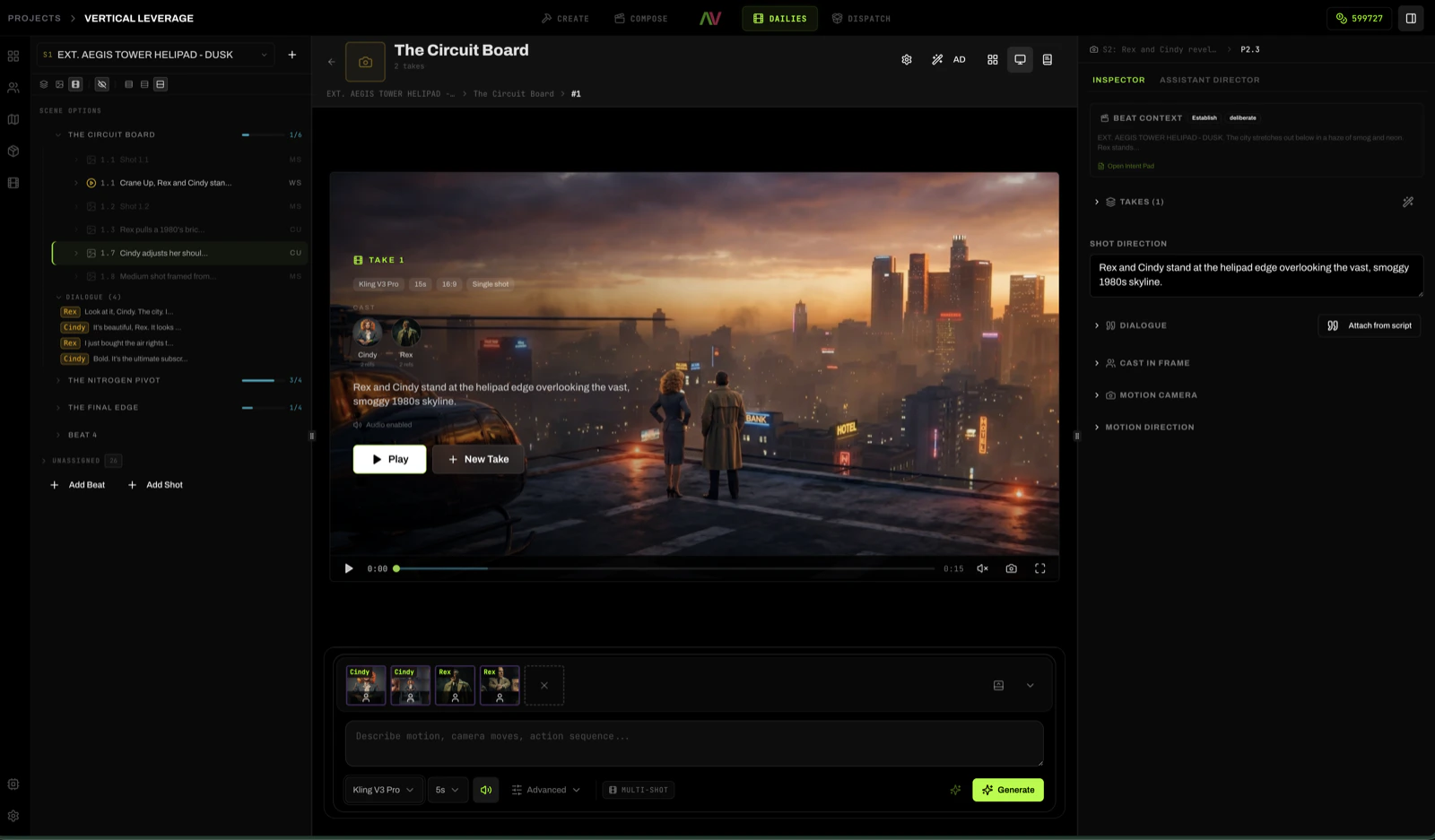
Every generation knows what made it: which character, which references, which model, what came before
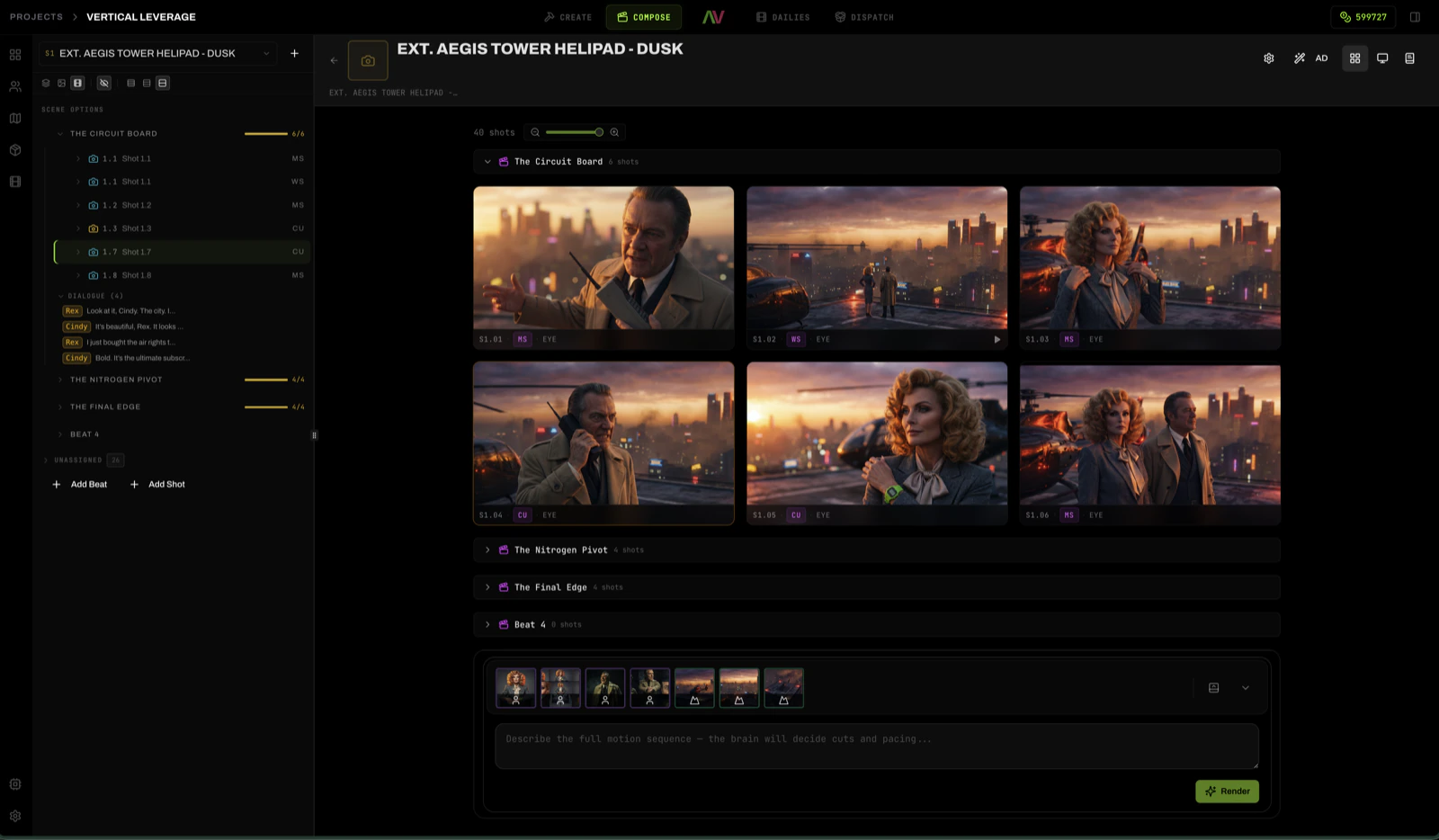
You don’t have to think about the graph to work with it. You just direct. Cast a character, plan a scene, generate a frame, generate a take. The graph forms underneath as you go.This is why a Pack from Dispatch carries the right cast and lineage without anyone organizing anything. Why the Ledger can show every generation with full context. Why a character generated in Create looks like the same character three weeks later in Dailies.Most AI tools think in transactions. Each generation is its own moment, disconnected from what came before. Loraverse thinks in productions. Every generation is a step in something larger.A director’s mental model of a production, rendered as a tool. You direct. Loraverse keeps the relationships.